The USS Tang (SS 306) was lost at sea in the Strait of Formosa, now Taiwan, 25 October 1944. Nine men survived and were captured. They spent the remainder of the war in Japan. The Commanding Officer wrote a book, “Clear the Bridge!”, in 1977 detailing the five war patrols of Tang and the events leading up to and including its loss with all but nine of her crew.
Old friend Robbie Robertson gave me his copy of the book while I was visiting him and his spouse Olga in Florida this past April. Robbie had been on the USS Charr (SS 328) in 1959 as an eighteen year old sailor when Charr made a patrol along the east coast of Russia. Later, he and I met as pre-commissioning crew members on USS Sam Houston starting in 1960. We made five patrols together.
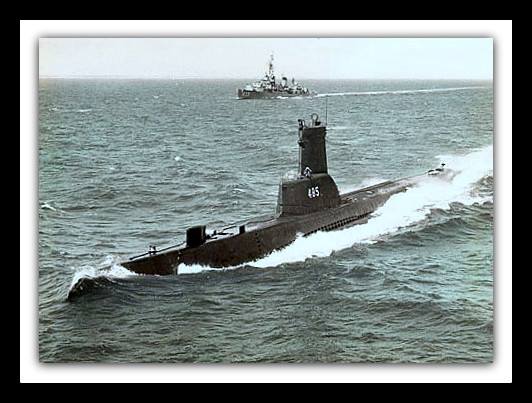
The author of “Clear the Bridge!” is Richard O’Kane the Commanding Officer of Tang. Commander O’Kane made all five war patrols. He was a brilliant skipper. The crew were courageous and highly skilled. Reading the story of the building, testing, preparing for sea was a treat and a torture. I spent ten years on submarines at sea; from ’58 to ’68. Years later I served as a pilot on a deep submersible for three years in the Pacific. My first submarine was a ‘fleet boat’, what we called those submarines from WW II. They were powered by electric motors that got their energy from electric generators driven by diesel engines while on the surface or powered by lead-acid storage batteries. I’m very familiar with the building and operation of submarines. I’m also very familiar with the make up of the crewmen.
I spent two years on Sirago and later I served on nuclear submarines. On the nukes I made nine patrols of two months duration each. The whole patrol was conducted submerged. I made six of those patrols above the Arctic Circle off the coast of Norway and the other three I was in the Mediterranean Sea. I had a comfortable time for the most part. A major period of distress was immediately after the loss of USS Thresher which was lost at sea with all hands off the coast of New England. For several patrols after that disaster I was nervous as a cat. The loss of Thresher brought a greater sense of vulnerability. Plus I was getting older and wiser and more in touch with the hazards of our job on submarines. At the same time I was becoming more seasoned. I was a leader of almost a dozen men in the navigation department. Often I would reflect how someone with my background ever made it to this position in the Navy.
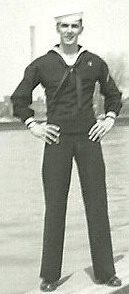
My love of submarines came about on a few levels. I always thought the Navy was a cool place to be. Ever since I was a kid in Dorchester living near Squantum Naval Air Station. As I watched the gas engine/propeller driven fighters flying around I imagined being a pilot. That didn’t happen. But one day I was sitting in front of my house on Adams Street when a sailor walked by. He was wearing the bell bottom blues. He was tall and slender and looked salty as hell. It was like seeing the future. I was impressed. My eyes grew wide and I could smell the sea. That’s what I wanted and that’s what I became.
I’m leading up to something important for me. My introduction to a tribe where I would become comfortable for the first time. Heretofore I had been a street punk and poser. I’d gotten by on luck and racial privilege. I was quick on my feet and people let me hoodwink them regularly. To a degree this is still true although now I recognize when I am regressing.
The tribe I speak of is the crew of Sirago. I went aboard in 1958 at the age of nineteen and right away I knew this was a different bunch of men. First of all many of them had been in submarines for years, they were veterans of the types of sea voyages that Tang made. We were only thirteen years removed from the end of WW II. I was in good company. This was also the period just following the loss of my father to suicide. He had been my hero albeit an ugly, vicious, abusive one. He was my father. I missed him and I was still forming my value systems and developing my character. These submariners came along in the nick of time. The effect of the two years I spent on Sirago was akin to being re-parented. I can recall nearly all of the episodes where I was a punk and some one of the older guys would look me in the eye and gently square me away. I learned about leadership and how to be a good shipmate from these guys. I formed a close attachment to the ship and the crew; one that has lasted a lifetime. In the years and submarine duties since I have put all that I learned to good use.
While reading “Clear the Bridge!” I could feel the same closeness in that USS Tang crew. They had older and younger, newbies and old salts, plus everything that goes with risk and ever present danger. As I got closer to the last chapter, the one where Tang is sinking ships in the Formosa Strait I kept slowing down the pace of reading. It took me three days to finally begin the chapter because I knew the date of Tang’s loss and I knew where they would get sunk. I didn’t want to witness the loss of USS Tang and her crew although it was seventy three years ago. I didn’t want to lose my new shipmates. It was hard to conceive these men were about to be trapped inside her hull for eternity. It was hard.
I yam what I yam. I’m a submarine sailor and that’s all what I’ll be.
G. M. Goodwin 15 May 2017
 Playing Fair and Being Kind