A favorite topic, the light and the dark of ourselves. I prefer more to wonder about the shadow. Our shadow is the part of us that is invisible to everyone; not just ourselves, to our own best friends or family or someone who is very familiar with our ways. The shadow would be the glass pane, lower-right in the Johari Window labeled “Unknown”, not known to self and not known to others.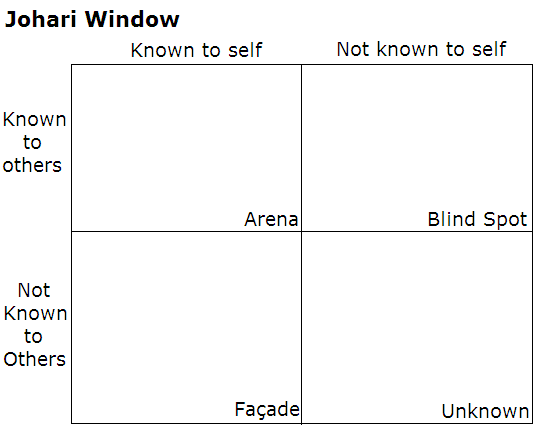
The model is unsophisticated and at first examination appears a little simplistic. That is until it is used in a group exercise with others. The object of the exercise is to expose more of the self through discussion and to learn about one’s self by listening to feedback. The processes behind the content in this effort is what makes for courageous and heroic action.
This reminds me of a revelation of my own, and in this case I will be sharing something with you of myself that few people know. My adventuresome life has given me so much enjoyment. Being a pilot of a deep submersible was a mix of fun and terror. I have been places where no other person will ever go. Even with all of that exciting, macho experience I must say that the most terrifying place for me to go and explore has been my own deep and dark inside. My shadow. Talking about my inner-most fears, doubts, and insecurities with another makes my knees shake. Listening to another describe how I appear to them is equally nerve racking. This is what makes this Johari Window so valuable as a learning tool.
In doing Alternatives to Violence Project (AVP) workshops with incarcerated people I have found it useful to remember that there are three parts to each exercise of the three day agenda. Each exercise contains a set-up, a performance, and a processing. The set-up contains the description of what it is that will be performed in the preparation. The performance is the actual exercise activity. The processing is the discussion, the debrief, the reflection on what was learned. The processing is where most, if not all, of the learning happens. I’ve seen processing go on for several hours.
To return to the shadow and the light and dark side of our selves I have been reading Robert Bly’s “Little Book on the Human Shadow”. In it he shares poetry of his own that contains the element of the dark. It helps to read the poems to get a feeling for the undercurrent of darkness that exists in reality. The darkness that threatens and causes nervous discomfort. The poetry gains a huge dimension of character with the inclusion of the dark. I think in meeting people with both sides available is a richer experience.
Bly also includes a metaphor for the dual nature of the real in a beautiful art piece, the North Rose window of Chartres Cathedral in Paris. Look at it here and see if you can feel the closeness of each part of light and dark with the other. I like this picture. It helps me to relate the shadow of the self with all that is wondered about.
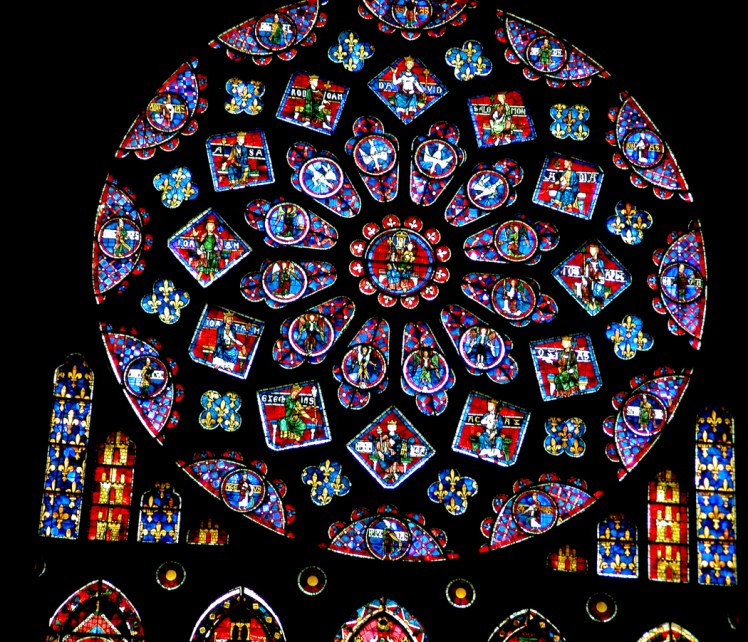
I need to leave this as it is for your own reflection. I can’t go further without interfering with other’s concepts, beliefs, experiences.
It was nice spending this time with you. I hope your day is as lovely as this one in Santa Fe, New Mexico. Peace out.
G. M. Goodwin 10 October 2017
 Playing Fair and Being Kind
I agree that exploring one’s personal dark side is terrifying. But the cookies are good. (the benefits) Thanks for sharing the Johari Window. It’s been several years since I have seen that. It’s a good model, and it helps me to keep on track.
I continue to be impressed by your integrity. Keep on being your wonderful self.
I’m going to reflect on your comment about the cookies being good.
It is good to hear from you, as usual, Lynne.
“A setup, a performance, and a processing”: a colorful example, well drawn, might have been nice, (to bring these three together), raw.